A few years ago, voice assistants like Siri or Google Assistant often frustrated us with their limited contextual understanding. They could only answer simple questions or turn on smart home lights.
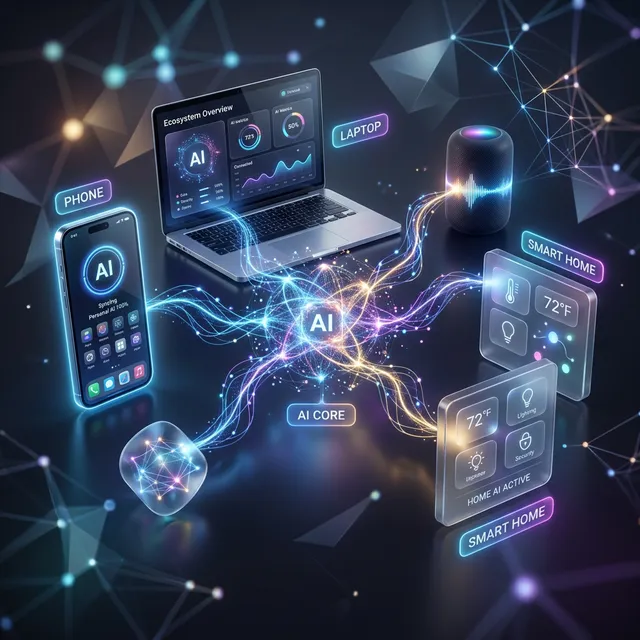
However, as of March 2025, we are witnessing the birth of the Personal AI Ecosystem, integrated natively into the kernel of our smartphone and computer operating systems.
Intelligence That Understands Your Life Context
Unlike public AI, a personal AI assistant in 2025 has (secure and encrypted) access to your personal data: emails, calendars, notes, and purchase history.
Imagine you only need to say: “Prepare a proposal document for the client I met yesterday in Kuningan, attach the latest package prices, and send it via WhatsApp.”
The AI will figure out who the client is based on the meeting location in Google Maps and calendar logs, find the price files in cloud storage, compose the message, and execute the delivery.
Privacy as a Top Priority (On-Device AI)
Many people’s biggest fear is their personal data being sent to giant company servers. In 2025, thanks to highly powerful NPU (Neural Processing Unit) chips in the newest phones, most of this AI processing is done locally on your device.
Your data never leaves your phone. This provides corporate-level security but with super-level intelligence.
Transformation of Human-Device Interaction
We are beginning to leave the “Point and Click” era for an “Intent-Based UI” era. Our digital devices are no longer passively waiting for clicks but are proactively offering suggestions and completing routine tasks.
For companies that want to remain relevant, ensuring that their digital services (such as Business Websites) are ‘friendly’ to these AI assistants is a necessity. The implementation of Structured Data and Semantic SEO becomes highly crucial.
Prepare your digital infrastructure for the AI future. Learn more about how we help businesses adapt at digitalsitepro.