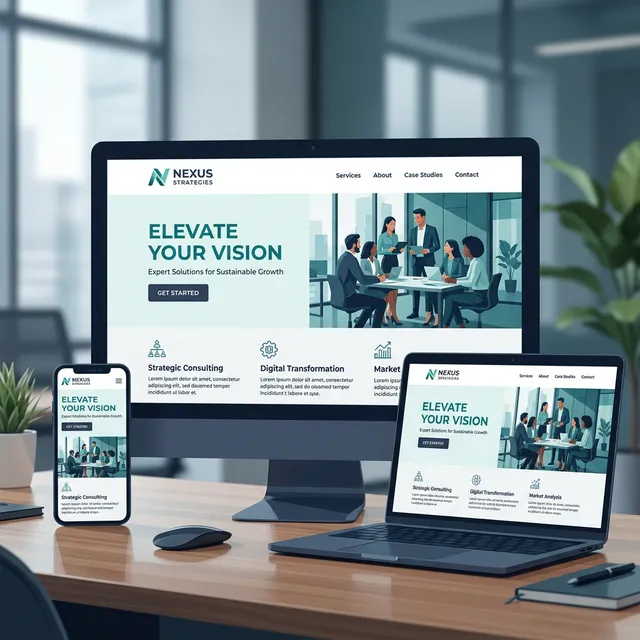
Web design moves incredibly fast. What was considered “cool and modern” three years ago can look outdated, cluttered, and suspicious to modern internet users today.
If your Company Profile or Online Store hasn’t been revamped in more than 2-3 years, you risk losing sales conversions simply due to aesthetics. Visitors judge your business’s credibility in the first 50 milliseconds based on your website’s appearance.
Here are the 5 biggest web design trends of 2025 that you should adapt to stay ahead of the competition.
1. Personalized Micro-Interactions (Not Just Your Average Hover)
Buttons that change color when hovered over have become an outdated standard. In 2025, premium websites are filled with sophisticated micro-interactions.
This includes small animations when successfully adding items to a shopping cart, arrow cursors that change shape to “View Project” when hovering over a portfolio, or text that has subtle reflection effects when clicked.
This makes digital interactions feel very organic, tactile (like touching real objects), and “alive”.
2. Bento Grid Layouts
Popularized by Apple presentations and modern UI dashboards, Bento Box style designs dominate 2025. This style uses a grid structure (boxes) containing visual cards that hold information, metrics, icons, or images in one neat view.
Bento Grids are highly efficient on smartphone screens — allowing designers to convey various marketing messages (USPs) simultaneously without forcing users to scroll too far.
3. True Dark Mode as the Default
Previously, Dark Mode was just an optional toggle feature. Now, many premium brands — especially in the SaaS, tech, entertainment, and creative industries — make deep black or dark gray (OLED Black) backgrounds their default experience.
Combined with neon color palettes or bright pastel gradients, Dark Mode reduces eye strain, saves visitor gadget battery life, and immediately provides an elegant and expensive aura.
4. Cinematic Typography (Giant Text Elements)
Giant “Hero” images that fill the screen are starting to be replaced by massive experimental text. Huge typography with sans-serif or modern serif fonts is used as the primary focus point.
Often, letters are animated to follow the user’s scroll, overlap with images, or subtly change thickness. This is a smart way to deliver messages (Headlines) clearly without distraction while maintaining very high aesthetic value.
5. Glass-Based UI (Glassmorphism & Claymorphism)
After Flat Design became too boring, designers brought back subtle 3D elements.
- Glassmorphism: Information boxes that are translucent like frosted glass, providing a very clean illusion of depth.
- Claymorphism: Elements shaped like soft clay with very rounded edges, using subtle double shadows (inner and drop shadow).
These are very commonly used for floating navbars, price cards, or “Call To Action” buttons.
Conclusion
Following trends isn’t just about “joining the crowd.” Modern websites are designed not only for artistic beauty but to retain the attention span of increasingly impatient humans.
Is your business website outdated and in need of a facelift according to current designs? The UI/UX design team at digitalsitepro are experts at bringing your brand identity to life using the latest 2025 technology trends.
Contact us today! Consult on your website revamp for free with our experts.